E-Commerce Addict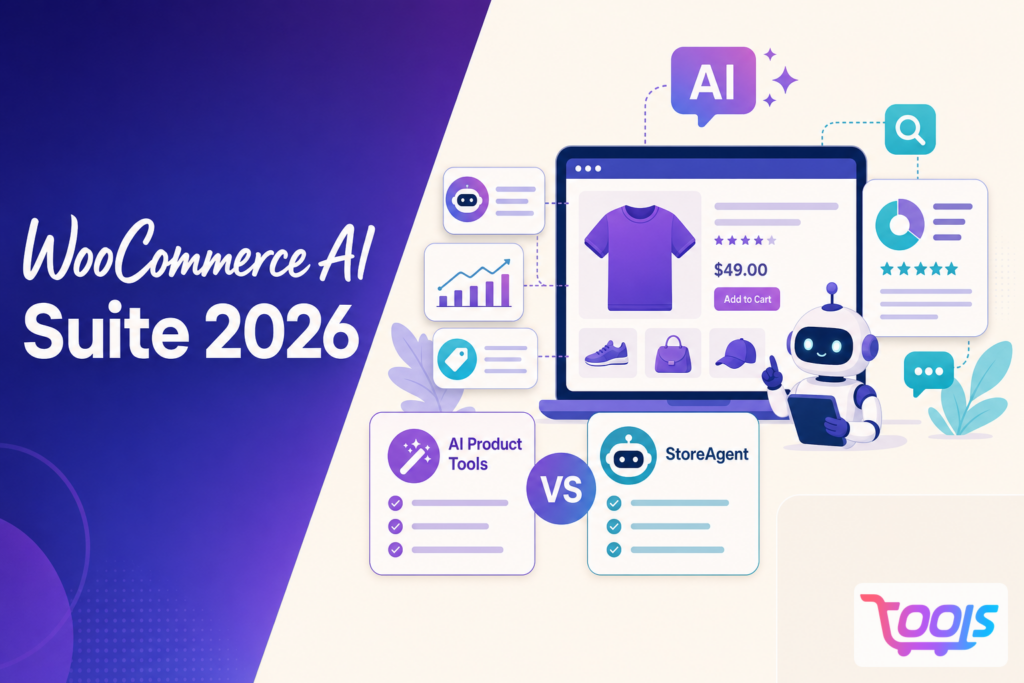
Quick answer
AI Product Tools and StoreAgent solve similar problems, but they take very different approaches.
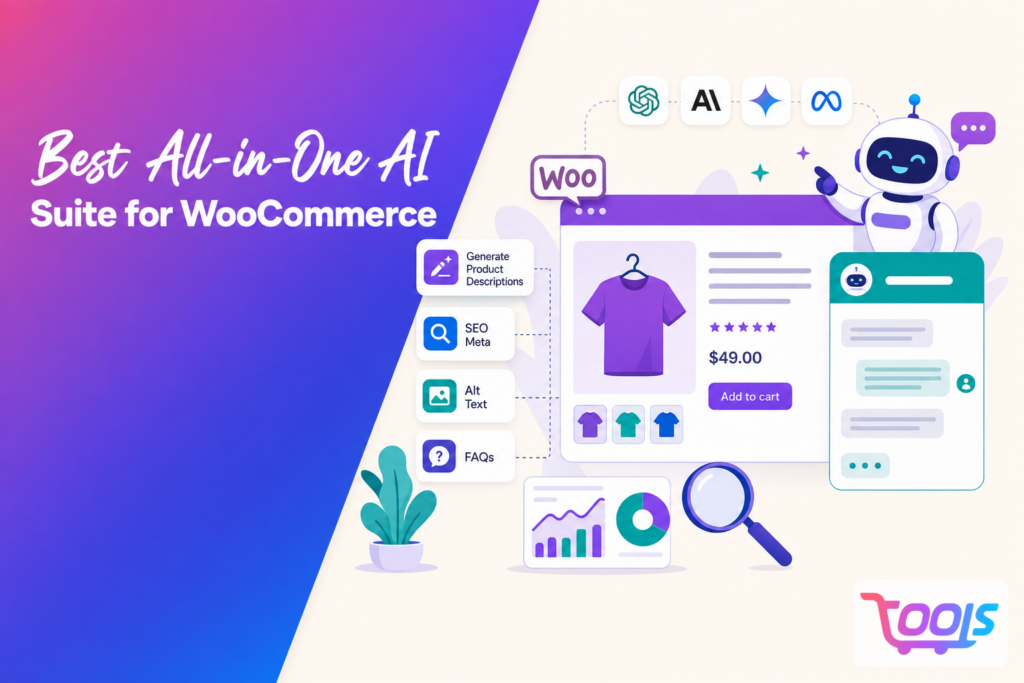
AI Product Tools is a WordPress native WooCommerce AI suite built around flexibility and control. It combines product descriptions, SEO metadata, image alt text, product titles, FAQs, bulk generation tools, automation workflows, and a store aware AI chatbot in a single plugin.
StoreAgent takes a more managed approach. AI processing is included, setup is simpler, and its published features place more emphasis on customer support workflows, order related conversations, review summaries, and conversion insights.
If you want an all in one WooCommerce AI platform with advanced content generation, automation, prompt customization, model flexibility, and detailed bulk editing workflows, AI Product Tools is likely the better fit. If you want the simplest setup and prefer an AI service that handles most technical decisions for you, StoreAgent may suit you better.
| Dimension | AI Product Tools | StoreAgent |
|---|---|---|
| Operating model | WordPress native WooCommerce plugin with BYOK support | Managed SaaS platform with AI processing included |
| Pricing | Free plan available. Paid plans start at $7.99 per month. AI usage is billed through your chosen provider. | Subscription includes AI processing, subject to plan limits. |
| AI models | More than 300 supported models across OpenAI, Gemini, Claude, and OpenRouter | Public documentation provides less detail about provider and model selection |
| Content tools | Product descriptions, SEO metadata, image alt text, FAQs, product titles, bulk generation, and a store aware chatbot | AI content tools, chatbot, review summaries, conversion insights, and product listing insights |
| Setup | Requires an API key for most providers | No API key required |
| Prompt customization | Visual Prompt Builder, reusable prompt templates, custom instructions, and brand voice controls | Managed workflow with fewer publicly documented prompt customization options |
| Automation | Built in scheduler, recurring automation jobs, advanced product filters, and automated content workflows | AI task automation with less emphasis on user configurable scheduling workflows |
| Bulk workflow | Live generation progress, inline editing, approval workflows, retries, and detailed review controls | Bulk generation with review capabilities |
| SEO tools | Dedicated SEO metadata generator, SERP previews, FAQ schema, product titles, and taxonomy content generation | SEO friendly content generation |
| Customization | Custom fields, custom taxonomies, custom prompts, custom AI providers, and custom models | More opinionated and managed experience |
Which plugin covers more in one place?
AI Product Tools combines multiple WooCommerce AI workflows inside a single plugin. Beyond product content generation and AI assisted product conversations, it also includes SEO metadata generation, FAQ creation, image alt text generation, product title optimization, automation workflows, advanced bulk editing tools, prompt customization, and scheduled content updates.
For many stores, this can eliminate the need for several separate AI, SEO, and content generation plugins. The goal is to reduce the need for separate SEO, content generation, and chatbot plugins.
StoreAgent also combines several AI features, but its focus is different. Its published documentation highlights managed AI processing, order support, review summaries, conversion insights, and integrations with WooCommerce extensions.
The better choice depends on what you mean by “all in one.” If you want one plugin that replaces several AI tools while leaving provider choice in your hands, AI Product Tools is built around that idea. If you want a managed service that handles the AI side for you, StoreAgent matches that requirement.
Product content generation
AI Product Tools places more emphasis on structured WooCommerce content.
It supports product descriptions, SEO metadata, image alt text, FAQs, product titles, bulk generation, reusable prompts, a visual prompt builder, FAQ schema, SERP previews, and custom taxonomy workflows.
Another major difference is workflow control.
AI Product Tools includes advanced bulk generation interfaces with live progress tracking, inline editing, approval workflows, regeneration options, reusable prompts, and brand voice controls. This makes it particularly useful for stores managing hundreds or thousands of products.
StoreAgent also includes AI content features, although its public materials focus more on review summaries, product insights, and managed assistance than on SEO content workflows.
For stores updating large catalogs or creating SEO content in bulk, AI Product Tools documents more features in this area.
AI models and ongoing costs
One of the biggest differences is how each product handles AI providers.
AI Product Tools supports more than 300 models across OpenAI, Gemini, Claude, and OpenRouter. You decide which provider to use and can change providers later without changing plugins.
Model flexibility is only part of the picture.
AI Product Tools also allows merchants to customize prompts, switch providers, reuse prompt templates, create brand specific workflows, and optimize costs by assigning different models to different tasks.
For stores that regularly generate large amounts of content, this level of control can become increasingly valuable over time.
StoreAgent includes AI processing in its subscription. That removes the need to think about API keys or model selection.
The tradeoff is straightforward. AI Product Tools gives you more control over providers and spending, while StoreAgent removes most of the setup and management work.
Setup
StoreAgent is easier to start with because AI processing is already included.
AI Product Tools asks you to connect an API key before you begin. After that, you can switch providers or models without changing your workflow.
For WordPress users who already manage plugins and integrations, that extra setup may not be a major hurdle. Others may prefer StoreAgent’s simpler onboarding.
Chatbot features
The chatbots are aimed at slightly different jobs.
AI Product Tools combines a sales focused chatbot with its content generation tools, making it useful for helping shoppers find products.
StoreAgent’s published features focus more on customer service. They include order status, order history, chat history, support escalation, and support for more than 100 languages according to its public documentation.
If your chatbot mainly helps customers choose products, AI Product Tools aligns well with that use case. If most conversations involve existing orders, StoreAgent documents more support features.
Automation and workflow flexibility
One area where AI Product Tools differentiates itself is workflow automation.
The plugin includes recurring automation jobs, advanced product filters, scheduling options, bulk generation queues, approval workflows, and automated content updates.
Instead of generating content one task at a time, merchants can build repeatable workflows that continuously improve and maintain their product catalog.
StoreAgent focuses more on managed AI assistance, while AI Product Tools gives merchants more direct control over how and when content is generated.
Privacy and control
AI Product Tools stores encrypted API keys locally and sends requests to the AI provider you choose. That gives merchants more visibility into where AI requests are processed.
StoreAgent handles AI requests through its managed platform, which reduces administration but also means the service sits between your store and the AI processing.
Neither model is inherently better. The choice comes down to whether you value direct control or operational simplicity.
Overall value
AI Product Tools is aimed at merchants who want one plugin to handle product descriptions, SEO metadata, image alt text, FAQs, product titles, bulk generation, and a store aware chatbot while choosing their own AI provider.
StoreAgent’s value comes from convenience. AI processing is included, setup is simpler, and its published features include customer support tools, review summaries, conversion insights, and integrations with extensions such as Advanced Coupons, WC Vendors, and Wholesale Suite.
Verdict
AI Product Tools is a strong choice for WooCommerce merchants who want more than a chatbot or a product content generator.
It combines product descriptions, SEO metadata, image alt text, FAQs, product titles, automation workflows, advanced bulk editing, prompt customization, and a store aware AI chatbot inside a single plugin while allowing merchants to choose their preferred AI providers and models.
StoreAgent is a strong option for merchants who prioritize simplicity, managed AI processing, and customer support related conversations.
For businesses that value flexibility, workflow control, content operations, and long term scalability, AI Product Tools offers a broader and more customizable WooCommerce AI platform.
Learn more
If you want to evaluate either option further, compare the current feature lists, pricing, AI model support, and documentation before deciding which approach best fits your WooCommerce workflow.
Frequently Asked Questions
What is the main difference between AI Product Tools and StoreAgent?
AI Product Tools is a WordPress native WooCommerce plugin that lets you choose your AI provider, while StoreAgent is a managed SaaS platform with AI processing included.
Which plugin is better for WooCommerce product content generation?
The article says AI Product Tools documents more features for structured product content, including product descriptions, SEO metadata, image alt text, FAQs, product titles, bulk generation, reusable prompts, and related workflows.
Do I need an API key for AI Product Tools?
Yes. AI Product Tools requires an API key for most providers, while StoreAgent includes AI processing and does not require users to manage API keys.
How do the chatbot features differ?
AI Product Tools focuses on product discovery with a store aware sales chatbot, while StoreAgent emphasizes customer support features such as order status, order history, chat history, support escalation, and multilingual support.